Kinema is soybean fermented by a traditional method of the eastern Himalaya. It is eaten in Sikkim, the Darjeeling hills and eastern Nepal, where it is part of everyday cooking in many Nepali households. Similar fermented soybean is known as Axone or Akhuni in Nagaland and Hawaijar in Manipur.
How it is made
Soybeans are soaked, boiled and lightly crushed. They are then wrapped in leaves, often fern or banana leaves, packed into a bamboo basket and left in a warm place for a few days to ferment. The beans turn sticky and stringy and develop a strong, ammonia-like smell. Kinema can be cooked fresh at this stage, or dried in the sun so it keeps for months.
Research by Jyoti Prakash Tamang and colleagues has found that the fermentation is carried out mainly by Bacillus bacteria, including Bacillus subtilis, the species also used to make Japanese natto. These bacteria produce the substance that makes the beans sticky.
What it tastes like
Kinema has a deep, savoury taste and a smell that many first-time eaters find strong. People who grew up with it value the smell, and in some households calling it unpleasant is considered rude. Once cooked, the smell softens and the savoury flavour comes through.
How it is eaten
The most common dish is Kinema curry, fried with onion, tomato, garlic and chilli and served with rice. It is also added to dal, cooked with pork, or made into a pickle with chilli. Our post on the history of Kinema and Axone includes a step-by-step Kinema curry recipe.
Kinema from NE Origins
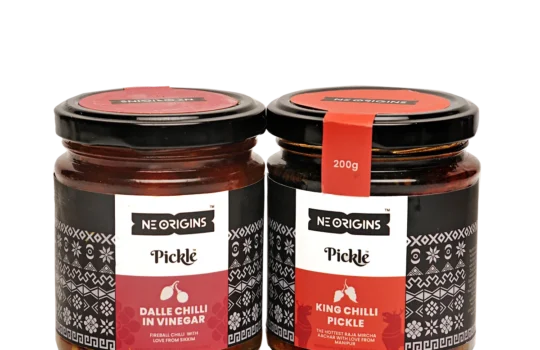
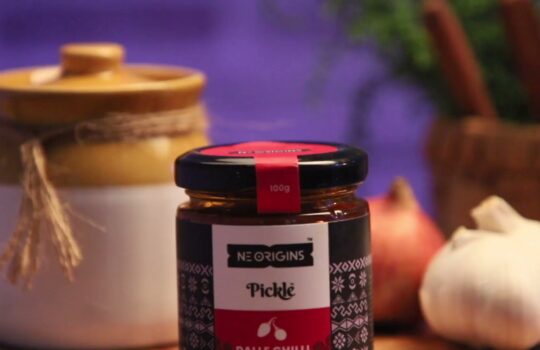
We sell Kinema (Axone) with Dalle Chilli Pickle, ready to eat with rice, and Kinema Chilli Seasoning, a dried crumble to sprinkle over noodles, fried rice or eggs. Both are also in the Himalayan Pantry Box.
Sources: Kinema, Wikipedia; Chettri, Bhutia and Tamang, Frontiers in Microbiology, 2016.