Bamboo shoot pickle is one of the most common pickles in Northeast India. Many households in Sikkim, Assam, Manipur and the Darjeeling hills keep a jar. This guide explains what it is, how it tastes and how to eat it.
What bamboo shoot pickle is
Bamboo shoots are the young, tender stems cut from bamboo before they harden. They are peeled, sliced and either used fresh or fermented. In Sikkim and Nepal fresh bamboo shoot is called tama and the fermented form mesu. In Manipur fermented bamboo shoot is soibum, and in Assam it is khorisa. For pickle, the shoots are cooked with chilli, salt, oil and spices.
What it tastes like
Bamboo shoot pickle is sour, crunchy and savoury. Fermented bamboo shoot has a strong smell that some people take time to like. When it is pickled with chilli, the bamboo softens the heat, so a bamboo shoot pickle is usually milder than a pickle made of chilli alone.
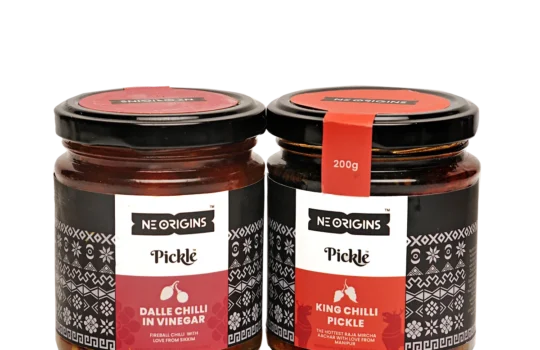
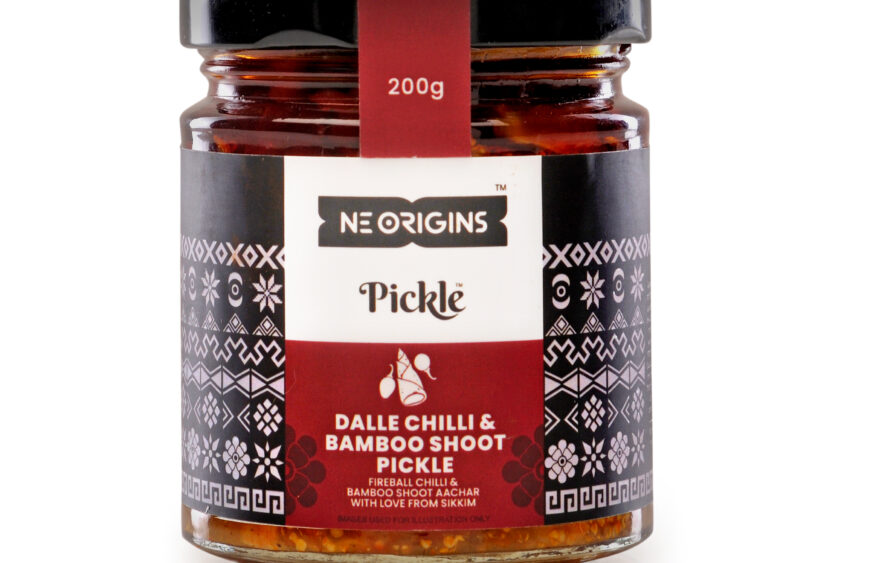
The NE Origins Bamboo Shoot Pickle combines bamboo shoot with Dalle Khursani, the round red chilli of Sikkim, in mustard oil. It rates 6 out of 10 on our heat scale, against 7 for the plain Dalle Chilli Pickle and 9 for King Chilli.
How to eat it
- With plain rice and dal, a spoonful on the side of the plate.
- With momos, thukpa or chow mein.
- With rotis and parathas, in place of mango or lime pickle.
- Alongside pork, chicken or fish curry.
How to store it
Use a clean, dry spoon, keep the lid closed and store the jar in a cool, dry place away from sunlight. Keeping the bamboo pieces under the oil helps the pickle keep longer. Our jars list their best-before date on the label, and the NE Origins bamboo shoot pickle is best before 18 months from manufacture.
Ingredients and allergens
Our bamboo shoot pickle contains Dalle chilli, bamboo shoot, iodised salt, mustard oil, spices and an acidity regulator (INS 260). It contains mustard.
Where to buy bamboo shoot pickle
NE Origins sells Dalle Chilli with Bamboo Shoot Pickle in a 100g jar and a 200g jar, delivered across India.
Read more: The different forms of bamboo shoot in Northeast India and How soibum is made.