Kinema, natto and Axone are all soybeans that have been boiled and fermented. They come from different places and are eaten in different ways, but they are close relatives. This guide explains how they compare, for anyone who knows natto and wants to try kinema, or the other way round.
The short answer
Natto is Japanese. Kinema is from Sikkim, the Darjeeling hills and eastern Nepal. Axone, also spelled Akhuni, is from Nagaland. All three are made by fermenting cooked soybeans with Bacillus bacteria, which make the beans sticky and give them a strong smell. Natto is usually eaten fresh and cold. Kinema and Axone are usually cooked, and both are often dried so they keep for months.
How each one is made
Natto is made in factories and homes in Japan by adding a starter culture of Bacillus subtilis (sold as natto bacteria) to steamed soybeans, then keeping them warm for about a day. The beans come out sticky, with long strings when stirred.
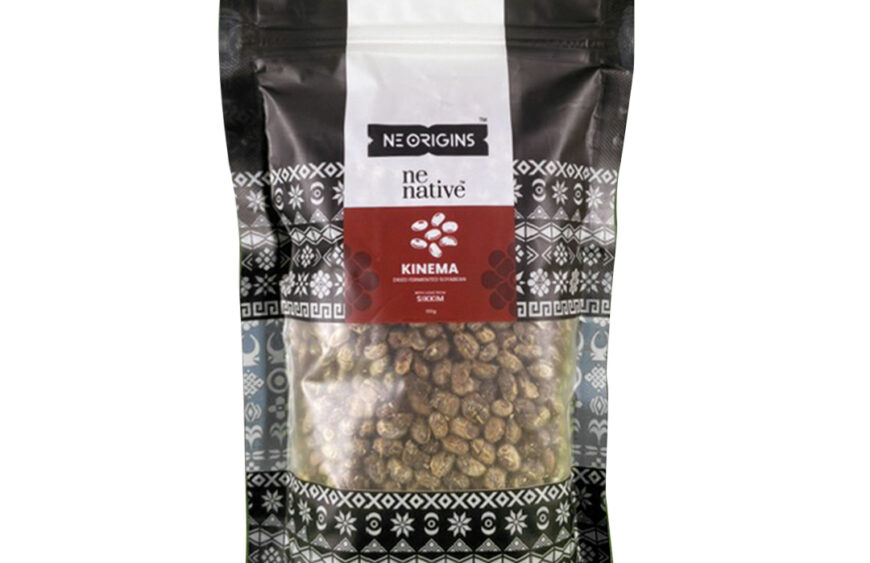
Kinema is traditionally made without an added starter. Soybeans are soaked, boiled and lightly crushed, then wrapped in leaves such as fern or banana leaves and left in a warm place for a few days. Research by Jyoti Prakash Tamang and colleagues found that the fermentation is carried out mainly by Bacillus subtilis, the same species used for natto. Fresh kinema is sticky. Much of it is then sun-dried, which is the form most people outside Sikkim will see.
Axone is made in a similar way in Nagaland. The boiled beans are wrapped in banana leaves and kept near the kitchen fire to ferment. They are often pressed into cakes or dried, and the smell is stronger than kinema. Hawaijar in Manipur and Tungrymbai in Meghalaya are related foods made in the same region.
How they taste
Fresh natto is mild, a little nutty and very sticky. Kinema and Axone have a deeper, more savoury taste, closer to a strong cheese or a meat stock, and the smell is stronger. Dried kinema loses most of its stickiness and tastes toasted and savoury once fried.
How they are eaten
- Natto: stirred and eaten cold over rice, usually with soy sauce and mustard.
- Kinema: cooked as kinema curry with onion, tomato, chilli and turmeric and served with rice, or fried and ground into a chutney. In Sikkim it is also added to soups and stews.
- Axone: cooked with pork, smoked meat or vegetables, or ground into a chutney with chilli.
Can you use kinema instead of natto?
Not as a straight swap. Dried kinema does not become stringy like natto, and it is meant to be cooked. If you like natto for its savoury, fermented flavour, kinema curry is the closest dish to try. If you want the cold, sticky texture of natto, kinema will not give you that.
Where to buy kinema
NE Origins sells dried kinema in a 100g pack, a kinema and chilli seasoning to sprinkle over rice and noodles, and a kinema pickle with Dalle chilli. All of them contain soy.
Read more: What is kinema? and Kinema and Axone: a history of fermented soybean in the Himalaya.