Dalle Khursani is a chilli grown in Sikkim, the Darjeeling and Kalimpong hills of West Bengal, Nepal and Bhutan. Its name means round chilli, after its shape, and in parts of Nepal it is called Akbare. The pods are small and round, about the size of a cherry, and ripen from green to bright red.
How hot it is
Published measurements put Dalle Khursani between 100,000 and 350,000 Scoville heat units. That makes it many times hotter than ordinary green chilli, though well short of King Chilli from Nagaland. The heat is sharp and comes quickly. Dalle also has a strong fruity aroma, which is the main reason cooks in the hills prefer it to other chillies.
GI tag
Dalle Khursani received a Geographical Indication (GI) tag for Sikkim in 2020. In 2021 the tag was extended to cover the Darjeeling and Kalimpong districts.
How it is grown
The plant flowers best at 20 to 25°C, and temperatures below about 12°C, even at night, hold back growth and fruiting. It needs warm, humid weather early in the season and dry weather as the fruit matures, because heavy rain rots the pods. It grows in sandy and loamy soil. In open fields the plant reaches 100 to 130 cm, and in greenhouses 150 to 180 cm.
How it is eaten
In Sikkim a whole Dalle is often eaten alongside dal and rice, a small bite at a time. It is ground into chutneys and momo sauce, chopped into curries, and pickled, either on its own or with radish, bamboo shoot or yellow peas. Pickling and drying are the usual ways of keeping it through the year.
From NE Origins
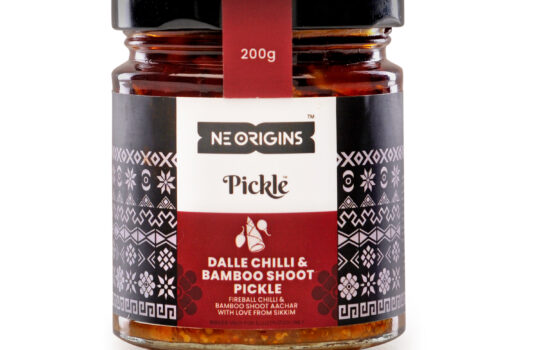
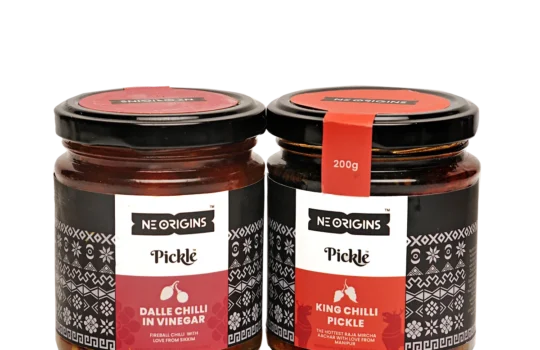
We sell Dalle from Sikkim in several forms: the whole Dalle Chilli Pickle, Dalle Chilli in Vinegar, Dalle Chilli in Salt Brine, Dalle Chilli Pure Paste and Dalle Chilli with Bamboo Shoot Pickle. For ideas on using a jar, see 7 ways to eat Dalle chilli pickle.
Source: Dalle Khursani, Wikipedia.