Honey jars are labelled raw, unfiltered, organic or pure, and the terms are easy to confuse. They describe different things. This post explains what each label usually means and how processing changes the honey.
What raw honey is
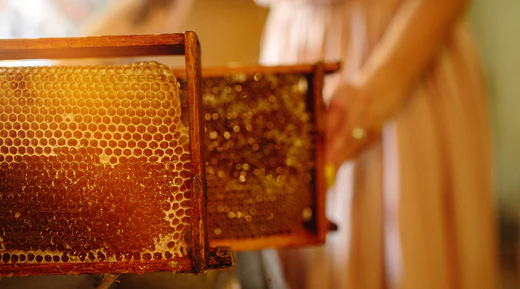
Raw honey is taken from the comb and strained to remove wax, debris and dead bees. It is not heated. It is often cloudy because it still contains small amounts of pollen and wax.
Unfiltered, organic and pure
- Unfiltered honey has been strained only lightly, so more pollen and wax remain.
- Organic refers to certification of how the bees and the surrounding land are managed. It does not say whether the honey was heated.
- Pure means nothing else has been added. It does not say whether the honey is raw.
How commercial honey is processed
Most supermarket honey is heated and finely filtered. Heating slows crystallisation and fermentation, which keeps the honey clear and runny on the shelf for longer. Fine filtering removes most of the pollen and wax.
Heat also reduces some of the natural enzymes in honey and can change its flavour. Raw honey keeps these, along with traces of pollen and propolis, the resin bees use to seal the hive.
Crystallisation is normal
Raw honey often turns thick and grainy within a few weeks or months. This is natural crystallisation of the sugars in honey and is not a sign that the honey is fake or spoiled. To make it runny again, stand the jar in warm (not boiling) water.
Added sugar syrups
Some honey on the market has been found to contain added sugar syrups. Buying from a known producer and reading the label are the best checks available to most buyers.
A note on infants
Raw honey, like all honey, should not be given to children under one year old.